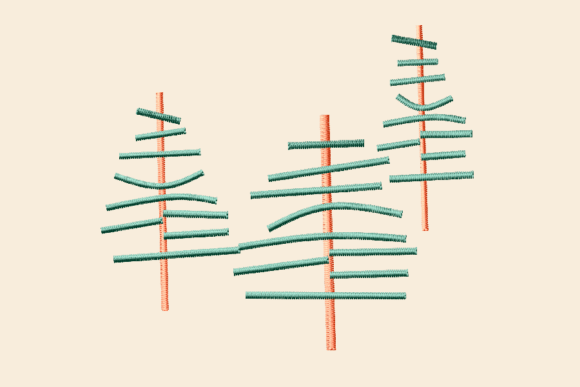
Pine Tree Satin Design Review for Merch
As an experienced embroidery designer, I spend a significant portion of my week reviewing digital assets to determine their viability for commercial production. When evaluating a machine embroidery design for small business merchandise, the criteria go far beyond simple aesthetics. We are looking for durability, clarity at scale, and brand alignment. Today, I am conducting a detailed review of the Pine Tree Satin embroidery design. While the product description highlights its suitability for weddings and general clothing decoration, my focus is on its potential as a core asset for small business merch, branded patches, and custom apparel lines.
First Impressions: Visual Personality and Brand Alignment
The title "Pine Tree Satin" immediately suggests a specific visual language. The word "Satin" in embroidery terminology refers to a dense stitch pattern that creates a smooth, glossy surface, often used for lettering or bold shapes. Combined with "Pine Tree," one might expect a rustic or natural motif. However, the provided description clarifies that this is actually a casing and elegant embroidery lettering design. This presents an interesting duality. It bridges the gap between organic warmth and refined professionalism.
For a boutique, a creative studio, or a local bakery, this duality is powerful. The design feels friendly yet premium. It avoids the overly rigid look of corporate sans-serif fonts while maintaining enough structure to be legible from a distance. For brand identity, this balance is crucial. A logo that is too playful may not convey trust, while one that is too formal may feel cold. Pine Tree Satin strikes a middle ground that enhances customer trust and recognition without sacrificing approachability.
Commercial Viability: Where This Design Shines
In the world of commercial embroidery, versatility is king. I have evaluated how Pine Tree Satin performs across various high-demand product categories for entrepreneurs and Etsy sellers.
- Embroidered Patches: One of the most profitable add-ons for handmade brands is the embroidered patch. Because the design utilizes satin stitches, it offers excellent coverage and durability. It works exceptionally well as a chest logo accent or a back-of-jacket detail. The smooth finish resists fraying better than complex fill stitches, making it ideal for items that undergo frequent wear.
- Staff Uniforms and Aprons: For café owners or florists, staff presentation matters. Applying this design to apron embroidery projects a cohesive team image. The elegance of the lettering ensures that employees look polished rather than casual, elevating the perceived value of the service provided.
- Caps and Headwear: Cap embroidery requires designs that conform well to curved surfaces. Lettering designs like Pine Tree Satin typically translate well to cap fronts, provided the hoop size is adjusted correctly. It serves as a subtle but effective brand mark that customers see daily.
- Tote Bags and Product Packaging: In the era of sustainable shopping, tote bag design is a massive revenue stream. A clean, elegant lettering design stands out against canvas or cotton blends. It can also be used as a branded product add-on, such as a tag on a jewelry box or a label on a candle jar, reinforcing visual consistency across all touchpoints.
Strategic Considerations and Limitations
No design is perfect for every application. As a designer, I must advise caution in specific scenarios where Pine Tree Satin might struggle. Understanding these limitations prevents costly production errors and protects your reputation.
- Small Patch Sizes: If you intend to create very small patches (under 2 inches), you must evaluate the stitch density. Satin stitches require a minimum width to maintain their shape; otherwise, they can pucker or merge into an illegible blob. Always test the design at its intended final size.
- Curved Surfaces: While caps are suitable, highly curved items like beanies or fitted sleeves can distort lettering. The tension of the fabric may cause the satin stitches to break or look uneven. Use a proper stabilizer to mitigate this, but be prepared for higher rejection rates.
- Detailed Outlines: If the design includes fine decorative elements surrounding the text, these may get lost on textured fabrics. On heavy-duty materials like denim or thick fleece, the contrast may be lost, reducing the impact of the finished product.
- Frequent Washing: For work shirts or aprons that are washed weekly, ensure the thread colors are colorfast. Dark uniforms may show lint or thread buildup more easily on satin stitches due to their dense nature. Regular maintenance is key to preserving the professional look.
Impact on Brand Identity and Customer Engagement
Investing in high-quality embroidery is an investment in your brand identity. When a customer receives a tote bag or wears a hoodie featuring Pine Tree Satin, they are interacting with your brand’s commitment to quality. The elegance of the design signals that you care about details. This directly influences buyer engagement and repeat purchases.
Furthermore, using a cohesive design asset across multiple products—such as matching your website logo, social media graphics, and physical merchandise—creates a memorable experience. Customers associate the clean, professional look of the embroidery with reliability. In a crowded marketplace, this differentiation is vital for handmade product sellers looking to scale.
Practical Designer Notes for Production
Before adding Pine Tree Satin to your production queue, follow these essential steps to ensure success:
- Test in Black and White: Remove color distractions by digitizing or viewing the design in monochrome. This helps you assess the spacing and legibility of the lettering structure.
- Check Thread Color Contrast: Satin stitches reflect light differently than other stitches. Ensure your chosen thread colors provide sufficient contrast against the base fabric. Low contrast can make the design appear muddy.
- Inspect Spacing and Hoop Size: Confirm the recommended hoop size for the design. If the design exceeds standard hoops, you may need to split the file or use a larger frame, which can affect accuracy.
- Use Proper Stabilizer: The stability of the fabric is just as important as the design itself. Use a cut-away stabilizer for stretchy fabrics and a tear-away for wovens to prevent puckering.
- Create a Printable Mockup: Before committing to bulk production, generate a printable mockup for client approval. This allows stakeholders to visualize the final result on different garments.
- Confirm Commercial Licensing: Most importantly, verify the licensing terms of the digital embroidery file. Ensure you have the right to use the design for commercial resale, especially if you are selling finished goods on platforms like Etsy or Amazon Handmade.
By following these guidelines, you can leverage Pine Tree Satin to create high-value design assets that elevate your small business. Whether you are launching a new line of custom apparel or updating your existing merchandise, this design offers a blend of elegance and practicality that resonates with modern consumers.